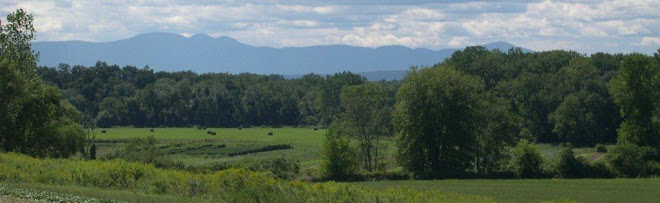
The leaf peeping season has come to a close this week. The rain on Saturday removed the last of the brilliant colors of the woods. When the colors appear, the tree is telling us it is preparing for winter. As if the tree follows the calendar, it stops producing food by halting photosynthesis and starts pulling the remaining sugars out of its leaves. Actually the tree already prepared for this in the spring as at the base of the leaf a special layer of cells (the abscission layer) is formed that allows the leaf to later separate and fall off. And it is a good thing they do; how many of you remember the October storm of 1987? We lost many trees due to an early snow storm. The wet snow stuck to the leaves breaking off many branches. We remember it well as we were out of power for more than a week as the broken branches fell on the power-lines.
Chlorophyll gives leaves their bright green color and is very dominant. Once the green fades, the other colors in the leaf become visible to us. With oak trees all we get is a plain brown, while the sugar maples can turn a magnificent red which is due from the sugars that get trapped behind the abscission layer. The glucose turns red from the presence of anthocyanin, an anti-oxidant that we find in all red and purple fruits and vegetables like berries, tomatoes, beets, apples and grapes. The orange in the leaves comes from carotenes and the yellow from xanthophyll, which we find plentiful in carrots, squash, and sweet potatoes. Apparently the cool nights and abundant sunshine we experienced during October of this year made for a better than average fall color show.
Fall is a time of transformation and a very similar process takes place with our annual, biannual, or perennial crops. The annuals include salad greens, tomatoes, peppers, eggplant, squash, and also the many garden weeds. Annuals survive the winter by completing the cycle of reproduction in one year with the production of an abundant seed supply. Pigweed, a common garden-weed, produces hundreds of thousands of seeds per plant. Every weed left in the field represents another generation of future weeds. Seeds can be tough and many survive the stomachs of our farm animals, wet soil conditions, and freezing temperatures. We use many annuals in the garden and their flexibility and vigor is an important trait as each year we can improve their qualities as new varieties become available.
The biennials have a different way to survive the winter. Some of the biennials are frost hardy greens like kale and collards. They have their own way to survive the cold temperatures. Due to the frost, their leaves turn sweet and lose some of their bitterness and the increased
glucose acts like antifreeze. Whenever someone tells me they don’t like Brussels sprouts I wonder if it is because they have never tasted a good one. Most of the cole crops available in the store come from the balmy West Coast. Cole crops and other greens harvested in October or November in the Northeast not only have superior taste and flavor, they are an important source of vitamin K, anti-oxidants, folate, magnesium, and even omega 3 fatty acids. So, eat those vegetables if you plan to be around for a while as these are compounds that keep us young!
With other biennials the leaves die back, allowing the underground parts and/or thick stems to remain alive. Carrots, sweet potatoes, parsnips, potatoes, beets, rutabaga, onions, and even cabbage and broccoli are all biennials that create an abundance of food to survive the winter and store it in their tubers, roots or stems. Instead of leaving them in the field we bring them inside our barn, and store them under optimum conditions.
There is another way we store the summer into the winter; the grasses and clovers of the pasture became beef and lamb. Even the butcher hogs and turkeys consumed high amounts of green plants and other culled vegetables from the packing barn. Animals raised on green plants, ripe fruits, and other colored vegetables are superior in health to animals raised on a grain only diet. If vegetables are good for us, we shouldn’t deprive the animals from it. What would your health be like if you would live on a diet of rice and beans only? Studies have shown that meat from pastured animals contains more anti-oxidants than meat from grain fed animals and a diet of grass prevents lipid oxidation (a major cause of deterioration of meat affecting flavor, color, texture, and nutritive value). But, besides that, to us it is simply intuitive that there is something fundamentally wrong with putting an animal in a barn deprived of sunlight, green plants, and colorful fruits. So we don’t keep as many animals over the winter as in the summer which is the reason we only provide you with meat in the fall.
So while it is getting colder, summer is not really over. Summer lives on in the crops that have been brought in to the barn like potatoes, winter-squash, sweet potatoes, carrots, parsnips, onions, and beets. The summer lives on in the many hay bales stored in the barn that will slowly be fed to the animals. Summer lives on in the field in the frost-hardy greens and lettuce, broccoli, cabbage, Brussels sprouts, and in the root crops like the celeriac and rutabaga that will soon be harvested. And summer lives on in the meat from our animals.
With the exception of cool weather loving crops like spinach, cauliflower and broccoli, most crops have stopped growing. These days the fields are like a giant walk in cooler. In the morning we put on an extra layer, wear neoprene gloves to keep our hands from freezing and harvest what is left. Let the warmth of the summer’s sun, preserved in our food, shine in our bellies.
~ Jean-Paul
“Autumn is a second spring when every leaf is a flower”. ~Albert Camus
Wednesday, October 29, 2008

Photos from the Farm


This week we are bunching kale and broccoli rabe. We are also harvesting a bumper crop of caulilfower.
Notes for Members and Recipes
FALL DELIVERY SCHEDULE:
Capital District: Oct. 28, Nov. 4 & 18, Dec. 2
Westchester: Oct. 29, Nov. 5 & 19, Dec. 3
NYC: Oct. 30, Nov. 6 & 20, Dec. 4
Columbia County: Oct. 31, Nov. 7, 14, & 21, Dec. 5
There will be the optional storage box delivery on your regular pickup day the week of Dec. 15th.
2009 ENROLLMENT FORMS:
Look for your 2009 enrollment form at your pickup site this week. YOU HAVE UNTIL JANUARY 6 TO RESERVE YOUR MEMBERSHIP. We have a long waiting list so please send your form in on time so that your share is reserved for the 2009 season. Please post-date your deposit check for January 1, 2009.
MEAT ORDERS:
We will have more pork available in a couple of weeks. The lamb will be available in two weeks. We still have some beef cuts available: chuck roast (boneless), rib steak, porterhouse steak, t-bone steak, short ribs, and soup bones.
RECIPES:
ONTARIO GREENS
1 – 1-1/2 pounds fresh greens, washed, chopped
2 tablespoons butter
1 large onion, chopped
1 tablespoon garlic
Salt & pepper
1/2 cup sour cream
Steam the greens about 5-10 minutes or until nearly cooked but still bright-colored. Meanwhile, melt butter in large skillet on MEDIUM HIGH. Add onion and garlic, sauté until soft, stirring occasionally. Stir in the greens. Season to taste with salt and pepper. Stir in the sour cream, let warm briefly. Serve immediately.
KARELIAN BORSCHT
2 tablespoons butter
4 medium beets, peeled, grated (about 4 cups)
1 teaspoon salt
4 tablespoons flour
2 tablespoons vinegar
1 small red cabbage, shredded (about 3 cups)
2 carrots, peeled, grated (about 1 cup)
1 bay leaf
1 clove garlic
1 tablespoon sugar
8 cups meat or vegetable broth
1/4 pound spicy sausage (such as andouille), optional
4 tablespoons sour cream, optional
Heat butter in four-quart kettle. Add beets. Cook until soft and almost brown. Add salt, flour and vinegar. Add cabbage, carrots, bay leaf, garlic, sugar and broth. Simmer at least 2 hours. Add water if too much liquid evaporates. Close to serving time, cook sausage in boiling water until fully cooked. Drain and slice. Place soup in bowls and top with sausage and sour cream.
Capital District: Oct. 28, Nov. 4 & 18, Dec. 2
Westchester: Oct. 29, Nov. 5 & 19, Dec. 3
NYC: Oct. 30, Nov. 6 & 20, Dec. 4
Columbia County: Oct. 31, Nov. 7, 14, & 21, Dec. 5
There will be the optional storage box delivery on your regular pickup day the week of Dec. 15th.
2009 ENROLLMENT FORMS:
Look for your 2009 enrollment form at your pickup site this week. YOU HAVE UNTIL JANUARY 6 TO RESERVE YOUR MEMBERSHIP. We have a long waiting list so please send your form in on time so that your share is reserved for the 2009 season. Please post-date your deposit check for January 1, 2009.
MEAT ORDERS:
We will have more pork available in a couple of weeks. The lamb will be available in two weeks. We still have some beef cuts available: chuck roast (boneless), rib steak, porterhouse steak, t-bone steak, short ribs, and soup bones.
RECIPES:
ONTARIO GREENS
1 – 1-1/2 pounds fresh greens, washed, chopped
2 tablespoons butter
1 large onion, chopped
1 tablespoon garlic
Salt & pepper
1/2 cup sour cream
Steam the greens about 5-10 minutes or until nearly cooked but still bright-colored. Meanwhile, melt butter in large skillet on MEDIUM HIGH. Add onion and garlic, sauté until soft, stirring occasionally. Stir in the greens. Season to taste with salt and pepper. Stir in the sour cream, let warm briefly. Serve immediately.
KARELIAN BORSCHT
2 tablespoons butter
4 medium beets, peeled, grated (about 4 cups)
1 teaspoon salt
4 tablespoons flour
2 tablespoons vinegar
1 small red cabbage, shredded (about 3 cups)
2 carrots, peeled, grated (about 1 cup)
1 bay leaf
1 clove garlic
1 tablespoon sugar
8 cups meat or vegetable broth
1/4 pound spicy sausage (such as andouille), optional
4 tablespoons sour cream, optional
Heat butter in four-quart kettle. Add beets. Cook until soft and almost brown. Add salt, flour and vinegar. Add cabbage, carrots, bay leaf, garlic, sugar and broth. Simmer at least 2 hours. Add water if too much liquid evaporates. Close to serving time, cook sausage in boiling water until fully cooked. Drain and slice. Place soup in bowls and top with sausage and sour cream.
Tuesday, October 21, 2008
Week 21 Letter from a Farmer
Last week we began a harvest of another kind, our animal crop for the season. Barbara Kingsolver describes, in her book Animal, Vegetable, Miracle, the slaughter of their chickens and turkeys as a harvest. At first I thought of this as a euphemism until I read a bit further and contemplated what she wrote. She says, “A harvest implies planning, respect, and effort.” Our animal operation requires just as much planning and care as our vegetable crops. The turning of grass into meat is just as miraculous as the turning of a tiny seed into a cabbage or ears of sweet corn.
In thinking about what type of livestock would fit well on the farm we took a careful look at what type of environment the animal would require. In other words, what makes a pig a pig and what makes a sheep a sheep. Wild boars live in the woods where they can root with their thick snouts for insects, grubs, and roots and where they can stay out of the sun. Our pigs live in two separate wooded pastures with plenty of space so that they don’t damage the woodland. We feed them thousands of pounds of culled vegetables from the fields and a grain mix milled by a local farmer. The grain is a mix of corn and soybeans. They also eat the spent barley from a local brewery. Pigs are omnivores and require the protein found in the grain in order to be healthy and plump animals.
Our sheep and Black Angus steers are raised solely on grass. Our pastures are a mix of grasses, native plants, and clovers. These animals aren’t physiologically meant to eat grain. Their multiple stomachs turn grass and clover into bone and muscle. It is quite amazing to watch them grow over the summer months as they graze over the farm. In some people’s experience, grass-fed meat products are tough and unpleasant to eat. Traditionally grain-fed cattle and sheep have marbled and tender meat. Unfortunately, these animals are also almost always sick from eating too much grain. Our steaks are tender and marbled because we carefully manage our pastures to include a rich mix of clover. The clover is high in protein in a form the animals can digest.
This year we also raised a few turkeys on pasture. We feed them organic grain from a feed company in Vermont. They also enjoy clover and pecking through the pasture for insects. They have equated humans with food and are quite tame. The whole flock follows us around the pasture when we refill their feeders. We have two breeds, the standard Large White, which is – you won't believe it – large and white, and the Broad-Breasted Bronze, which is a brown turkey with iridescent feathers and a huge breast. Broad Breasted Bronze toms (male turkeys) puff out their feathers and show off their tails just like the classic Thanksgiving motif. We only have 50 birds, so we can’t supply too many of you for your holiday meals. We are going to harvest them soon. If you are interested in a turkey we will ask you to pick it up at the farm on the day of the harvest and freeze it on your own. We don’t have enough freezer space for 50 birds at this point.
We enjoy raising animals and they are an important part of the farm. Their manure returns nutrients to the soil, their grazing improves the pasture and hay fields, and they inhabit parts of the farm that otherwise become overgrown with sumac and rose bushes. They add life to the farm in ways vegetables just aren’t able to. They also give us the opportunity to provide you with meat products that are raised sustainably and with respect. It isn’t easy to harvest our animals, but I don’t think it should be. Not all of you eat meat – in fact I don’t myself. But it is important to me that we provide an alternative to the meat products found in the grocery store. By making the choice to eat meat raised on a small farm where a pig can be a pig, you say “no” to the confinement operations and large meat-packing plants where the quality of life for the animals and workers is not considered. This choice returns the raising and harvesting of meat into the hands of farmers and butchers who are careful and considerate in their work.
~Jody
In thinking about what type of livestock would fit well on the farm we took a careful look at what type of environment the animal would require. In other words, what makes a pig a pig and what makes a sheep a sheep. Wild boars live in the woods where they can root with their thick snouts for insects, grubs, and roots and where they can stay out of the sun. Our pigs live in two separate wooded pastures with plenty of space so that they don’t damage the woodland. We feed them thousands of pounds of culled vegetables from the fields and a grain mix milled by a local farmer. The grain is a mix of corn and soybeans. They also eat the spent barley from a local brewery. Pigs are omnivores and require the protein found in the grain in order to be healthy and plump animals.
Our sheep and Black Angus steers are raised solely on grass. Our pastures are a mix of grasses, native plants, and clovers. These animals aren’t physiologically meant to eat grain. Their multiple stomachs turn grass and clover into bone and muscle. It is quite amazing to watch them grow over the summer months as they graze over the farm. In some people’s experience, grass-fed meat products are tough and unpleasant to eat. Traditionally grain-fed cattle and sheep have marbled and tender meat. Unfortunately, these animals are also almost always sick from eating too much grain. Our steaks are tender and marbled because we carefully manage our pastures to include a rich mix of clover. The clover is high in protein in a form the animals can digest.
This year we also raised a few turkeys on pasture. We feed them organic grain from a feed company in Vermont. They also enjoy clover and pecking through the pasture for insects. They have equated humans with food and are quite tame. The whole flock follows us around the pasture when we refill their feeders. We have two breeds, the standard Large White, which is – you won't believe it – large and white, and the Broad-Breasted Bronze, which is a brown turkey with iridescent feathers and a huge breast. Broad Breasted Bronze toms (male turkeys) puff out their feathers and show off their tails just like the classic Thanksgiving motif. We only have 50 birds, so we can’t supply too many of you for your holiday meals. We are going to harvest them soon. If you are interested in a turkey we will ask you to pick it up at the farm on the day of the harvest and freeze it on your own. We don’t have enough freezer space for 50 birds at this point.
We enjoy raising animals and they are an important part of the farm. Their manure returns nutrients to the soil, their grazing improves the pasture and hay fields, and they inhabit parts of the farm that otherwise become overgrown with sumac and rose bushes. They add life to the farm in ways vegetables just aren’t able to. They also give us the opportunity to provide you with meat products that are raised sustainably and with respect. It isn’t easy to harvest our animals, but I don’t think it should be. Not all of you eat meat – in fact I don’t myself. But it is important to me that we provide an alternative to the meat products found in the grocery store. By making the choice to eat meat raised on a small farm where a pig can be a pig, you say “no” to the confinement operations and large meat-packing plants where the quality of life for the animals and workers is not considered. This choice returns the raising and harvesting of meat into the hands of farmers and butchers who are careful and considerate in their work.
~Jody


NOTES & RECIPES FOR MEMBERS
PORK AND BEEF:
Look for pork and beef order forms at your pickup site and on our website http://www.roxburyfarm.com/. The meat will be delivered frozen. Lamb order forms will be at your site and online next week.
TURKEYS: We will be harvesting the 45 to 50 turkeys on November 3rd. If you are interested in a turkey you will need to pick it up at the farm on Tuesday, November 4th. You can pay for the turkey when you pick it up. They will be $4.50/lb and weigh between 12.5 to 30 lbs. The turkeys will be fresh and you will have to freeze them. Email the farm at info@roxburyfarm.com if you are interested. We will call you to let you know at what time to pick up your turkey.
FALL DELIVERY SCHEDULE:
Capital District: Oct. 21 & 28, Nov. 4 & 18, Dec. 2
Westchester: Oct. 22 & 29, Nov. 5 & 19, Dec. 3
NYC: Oct. 23 & 30, Nov. 6 & 20, Dec.4
Columbia County: Oct. 24 & 31, Nov. 7, 14, & 21, Dec. 5
There will be the optional storage box delivery on your regular pick-up day the week of Dec. 15th.
TWICE BAKED SWEET POTATOES
2 medium sweet potatoes
8 oz. chopped broccoli1
1/2 cup cottage cheese
2 tbsp chopped parsley
1 cup shredded cheddar or jack cheese
Bake sweet potatoes in 350 oven until done. Scoop out the potato halves, leaving a 1/4-inch thick border so you don't pierce the skin. In a bowl, mash the potatoes. Combine potatoes with broccoli, and cottage cheese. Scoop the potato mixture into the shells. Top each shell with 1/4 cup shredded cheese. Bake for 15 minutes or broil for 5 minutes, or until the cheese melts and browns on top. Top with chopped parsley and serve. (Serves 2 as an entrée.)
From Chief Family Officer at: http://www.chieffamilyofficer.com/
SWEET POTATO QUESADILLAS
2 medium sweet potatoes
1/2 onion
1 clove garlic
1 tbsp oregano
1 tbsp basil
1 tsp cumin
chile powder to taste
olive oil for sauté
Cut sweet potatoes into chunks, cook in steamer basket or microwave until soft, then mash. Chop and sauté garlic and onion in a large skillet. Add spices and sweet potato, mix well, adding a little water if it’s too sticky. Turn burner very low to keep warm without burning.
4 flour tortillas
4 oz. Brie or other medium soft cheese
2-3 leaves Kale (or other greens)
Preheat oven to 400. Oil a large baking sheet, spread tortillas on it to lightly oil one side, then spread filling on half of each. Top with slices of Brie and shredded chard, then fold tortillas to close (oiled side out). Bake until browned and crisp (about 15 min.), cut into wedges for serving.
From Animal, Vegetable, Miracle by Barbara Kingsolver at http://www.animalvegetablemiracle.com/
Look for pork and beef order forms at your pickup site and on our website http://www.roxburyfarm.com/. The meat will be delivered frozen. Lamb order forms will be at your site and online next week.
TURKEYS: We will be harvesting the 45 to 50 turkeys on November 3rd. If you are interested in a turkey you will need to pick it up at the farm on Tuesday, November 4th. You can pay for the turkey when you pick it up. They will be $4.50/lb and weigh between 12.5 to 30 lbs. The turkeys will be fresh and you will have to freeze them. Email the farm at info@roxburyfarm.com if you are interested. We will call you to let you know at what time to pick up your turkey.
FALL DELIVERY SCHEDULE:
Capital District: Oct. 21 & 28, Nov. 4 & 18, Dec. 2
Westchester: Oct. 22 & 29, Nov. 5 & 19, Dec. 3
NYC: Oct. 23 & 30, Nov. 6 & 20, Dec.4
Columbia County: Oct. 24 & 31, Nov. 7, 14, & 21, Dec. 5
There will be the optional storage box delivery on your regular pick-up day the week of Dec. 15th.
TWICE BAKED SWEET POTATOES
2 medium sweet potatoes
8 oz. chopped broccoli1
1/2 cup cottage cheese
2 tbsp chopped parsley
1 cup shredded cheddar or jack cheese
Bake sweet potatoes in 350 oven until done. Scoop out the potato halves, leaving a 1/4-inch thick border so you don't pierce the skin. In a bowl, mash the potatoes. Combine potatoes with broccoli, and cottage cheese. Scoop the potato mixture into the shells. Top each shell with 1/4 cup shredded cheese. Bake for 15 minutes or broil for 5 minutes, or until the cheese melts and browns on top. Top with chopped parsley and serve. (Serves 2 as an entrée.)
From Chief Family Officer at: http://www.chieffamilyofficer.com/
SWEET POTATO QUESADILLAS
2 medium sweet potatoes
1/2 onion
1 clove garlic
1 tbsp oregano
1 tbsp basil
1 tsp cumin
chile powder to taste
olive oil for sauté
Cut sweet potatoes into chunks, cook in steamer basket or microwave until soft, then mash. Chop and sauté garlic and onion in a large skillet. Add spices and sweet potato, mix well, adding a little water if it’s too sticky. Turn burner very low to keep warm without burning.
4 flour tortillas
4 oz. Brie or other medium soft cheese
2-3 leaves Kale (or other greens)
Preheat oven to 400. Oil a large baking sheet, spread tortillas on it to lightly oil one side, then spread filling on half of each. Top with slices of Brie and shredded chard, then fold tortillas to close (oiled side out). Bake until browned and crisp (about 15 min.), cut into wedges for serving.
From Animal, Vegetable, Miracle by Barbara Kingsolver at http://www.animalvegetablemiracle.com/
Tuesday, October 14, 2008
Photos from the Farm


On Saturday the members joined us for day of splitting and planting garlic. Thank you for your help and company.
Subscribe to:
Posts (Atom)