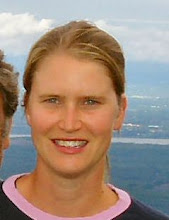
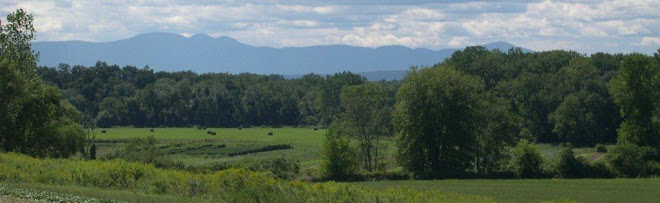
When I arrived at Roxbury Farm on a June morning ten years ago, I had no inkling of what a profound role Roxbury would play in my life – that my life would be forever entwined with the life of the farm.
Over the last ten years, the farm has changed dramatically. In 2000, we moved to new land and formed partnerships with Equity Trust and the Open Space Institute to preserve and protect the farm for agriculture in perpetuity. With the support of the membership, the farm has grown to 300 acres of protected prime agricultural land. When we moved to the farm, the land was starved and lifeless. Over the years, through the proper use of green manure crops, careful cultivation, application of compost and lime, diligent pasturing of cows and sheep, and the use of the biodynamic preparations, vitality and structure have returned to the soil. As we spend so much time and energy on caring for the soil, it was especially painful to watch 100 acres of it covered with the flood waters from the Kinderhook Creek two Thursdays ago. To be honest with you, in the thick of the moment questions arose with possible answers that would force us to make some radical changes should we ever continue to farm that land again. Now, after six days of sun and dry weather, the fields look better, and, with the help of many uplifting emails, we are able to put it behind us.
Thinking over the last ten years, I don’t really remember the crops we grew as much as I remember the people who grew the crops with us. The relationships we have formed because of the farm are among the most rewarding aspects of the work we do. We have been blessed by the talents of many people who come to the farm for a season or two to learn while they work, and work hard. Each of them has left their mark on the farm. Many of them have gone on to be farmers. Some don’t farm, but bring their experiences from the farm into their world by how they eat and how they educate others about agriculture and food. The farm has now grown to a size and level of complexity that means we need to share the management with others. Creating a space for other people to feel that the farm is theirs is a challenging exercise in creativity and patience on all sides, but it’s a challenge we gladly embrace.
The many members who support the farm every season with their share dollars, their volunteer labor at the sites or on the farm, and their encouraging notes and emails changed my idea about the future of agriculture. The relationship of trust between us, as your farmers, and you, as our customers, is quite remarkable. Your outpouring of support since the flood kept us going.
The last devastating flood I remember was in 1993, when I lived in Iowa. It felt like the whole state flooded, taking many of the corn and soybean fields away with the flood waters.
Those farmers had only the government to depend on for relief and support. Trying to negotiate the maze of government disaster relief forms and regulations is not something I would want to entrust my future to. Columbia County has been declared an agricultural disaster area this year, but there may never be any monetary support behind that disaster declaration. While about 65 acres of the second cut of our hayfields, an acre of broccoli, some lettuce and greens, some radish for seed, and about an acre of sweet corn were completely lost to the flooding, much of the yield of many of our fall crops will also be reduced due to the wet weather and diseases that came with it. The monetary damage to crops and equipment is close to $25,000; but knowing that you will continue to support us through this difficult year means that we have much less to worry about than many of the other farmers in our area.
There were only a few organic farms in Columbia County ten years ago; now there are many. Our Columbia County “farmers club” has grown and is another source of support and advice during all types of weather. On Saturday night, many of us gathered at Katchkie Farm, right across the road from Roxbury Farm, to enjoy a beautiful dinner at a Farm to Table event sponsored by Great Performances from New York City and the Red Barn restaurant here in Kinderhook. More than 100 people, farmers, chefs, and eaters gathered at linen-covered tables in the middle of the vegetable fields and dined on all-local produce, meat, cheese, and spirits. It was quite an experience to taste our vegetables prepared by expert chefs. It was amazing to see so many people come out to support local agriculture.
This is what I think has changed the most over the ten years I have been a part of Roxbury Farm: the ever-expanding interest and support for local food production by you, the eaters and customers. So, while the farm needs to change and adapt over the next ten years, knowing that we have your support will keep us going to 2019 and beyond.
Tuesday, August 18, 2009

Tuesday, August 4, 2009
Flood 2009
Last Thursday, July 30th, we received over 4 inches of rain. This in combination with 6 inches of rain from towns upstream from us on the Kinderhook Creek resulted in flooding that hasn't been seen since 1948. The lower fields on both farms were completely covered in water. Fortunately we weren't growing very many crops on the fields this season. The creek receded the fields are drying out. It will be quite awhile before we can work the soil again.
See the flood in photos below. From top to bottom:
Seven foot tall sorghum-sudan grass under water; Our tractor stuck on high ground in the cow pasture, it drove right out after the water receded: Our cows stranded in the pasture. The next morning the crew herded them out by land and by canoe; The row of equipment under water; The back of the sweet corn field in the flood water; Dave and Linda canoeing the cover crop on the field we grew our fall crops in last year; Two plantings of broccoli flooded out; The next three are different views of our vegetable fields under 3-7 ft of water.
See the flood in photos below. From top to bottom:
Seven foot tall sorghum-sudan grass under water; Our tractor stuck on high ground in the cow pasture, it drove right out after the water receded: Our cows stranded in the pasture. The next morning the crew herded them out by land and by canoe; The row of equipment under water; The back of the sweet corn field in the flood water; Dave and Linda canoeing the cover crop on the field we grew our fall crops in last year; Two plantings of broccoli flooded out; The next three are different views of our vegetable fields under 3-7 ft of water.
Monday, August 3, 2009


Thursday, July 9, 2009
Garlic Workday this Saturday

We will have a member workday this Saturday, July 11th to harvest the 2009 garlic crop. Please join us at the North Farm/CSA Barn location around 10:00 am. If you arrive later look for signs to tell you where to find us. We will have a potluck lunch around 12:30 pm so please bring a dish to share, your plates, and utensils. Wear old clothes and shoes that can get dirty and bring your sunscreen, water bottle, and gloves. Members of all ages are welcome for an hour or the whole day. Hope to see you there!
Photos from the farm

This is the new corral and handling system to help us move the cows with less stress on both the animals and the humans.
Week 5 Newsletter
This season we are managing more animals than in past years. We will be finishing eight steers on pasture at the South Farm. Jody’s 50 ewes produced about 80 lambs that are pastured on the North Farm. The two sows had large litters but, unfortunately, one of the sows wasn’t too careful and stepped on quite a few, reducing the number of butcher hogs this year to 15. That sow was brought to the butcher a few months ago (we constantly cull animals with bad mothering instincts or ones that are mean). The butcher hogs and the single sow live in a seven-acre forest at the North Farm. The sheep and pigs are kept in by a high-tensile, 13-strand, woven-wire fence; it keeps both the predators out and the farm animals in.
With the increase in the number of animals comes the need for good handling systems. When the steers are ready for slaughter, we need to maintain a stress-free environment (for both people and animals). Getting an animal into a small trailer in the middle of a field without a handling system is hard on the animal and frustrating for the people trying to chase it. Unless you are a hunter, there is little point in chasing animals.
Our steers have a 30-by-36-foot corral that moves with the pasture. It consists of a bunch of interlocking gates that are easily taken apart and put together again. They have grown accustomed to this place, as we have placed the water tub and salt box in the corral. During the extreme weather of the past few weeks, the steers have come to view the corral as a sort of barn they can use as a refuge. If we need to move the steers to another pasture, we first lock them inside the corral. In the beginning, they freaked out when we locked the gate behind them. But, despite their thick brains, they have realized that the reward of this temporary restraint is new lush grass - lately they passively wait until Mike and I have set up a new fence.
If we want to load them onto a trailer, we have another setup that moves the steers through a crowding tube and alley, which allows us to sort them. For some reason I don’t understand, cows and other animals are less frightened when they are forced to move through a curving aisle with walls that restrain them on both sides. Giving the animals too much space allows them to hurt themselves, as they respond to the illusion that they can flee; restraining them has a calming effect.
We have a similar sorting system for the sheep - the trick here is to get them all in the barn. Sheep have a strong herd mentality and, unlike the steers, the sheep stick together. That gives a sheepherding dog a great advantage, as he/she can move the herd as one flock. Once inside the barn, it has been a challenge to get the first sheep to move through the sorting chute, but when you get one in (sometimes with a little encouragement) the rest are more likely to follow.
The nice advantage of sheep and steers over pigs is that they make us completely self-sustainable in our food supply; they eat grass, which especially after all this rain has been in plentiful supply. For the pigs, we used to buy in pig feed from a local grain dealer that purchases his grain from local farmers. That has changed; this year he couldn’t guarantee that the grains he purchased were GMO-free. As a result, we have secured another source of pig feed from Green Mountain Organics that will guarantee the feed to be free from any GMOs. Unfortunately, the cost of certified organic feed is much higher - the cost per ton went from $310 to $590. So, my dear pork lovers, you will notice an increase in the cost of pork this fall. If that means that we have priced ourselves out of the market due to our set of high standards on both animal ethics and feed source, we will be happy to give the forest back to the gnomes.
On ethics: We are expecting a visit this month from the Animal Welfare Approved organization to label our meat as certified humanely raised and handled. Our main obstacle to certification had been that our butchers were initially a bit shy in getting certified (it takes both the farm and the processor to obtain the label) but, after their facilities and handling systems were approved, we were able to complete the process. The requirements for certification are reasonable and greatly consider the welfare of an animal from the animal’s perspective. Good pig, cow, or sheep farmers should be able to get into the psyche of the animals they raise; once you do, you can’t do a fraction of the things we typically expose our domestic animals to these days.
Not everyone enjoys eating meat, and neither should we consume a lot of it; but when we do, it’s great to know that the animal made a contribution to the environment by keeping more land in grass (a very good remedy against global warming) and that we did everything to assure you it led a stress-free life. ~Jean-Paul
With the increase in the number of animals comes the need for good handling systems. When the steers are ready for slaughter, we need to maintain a stress-free environment (for both people and animals). Getting an animal into a small trailer in the middle of a field without a handling system is hard on the animal and frustrating for the people trying to chase it. Unless you are a hunter, there is little point in chasing animals.
Our steers have a 30-by-36-foot corral that moves with the pasture. It consists of a bunch of interlocking gates that are easily taken apart and put together again. They have grown accustomed to this place, as we have placed the water tub and salt box in the corral. During the extreme weather of the past few weeks, the steers have come to view the corral as a sort of barn they can use as a refuge. If we need to move the steers to another pasture, we first lock them inside the corral. In the beginning, they freaked out when we locked the gate behind them. But, despite their thick brains, they have realized that the reward of this temporary restraint is new lush grass - lately they passively wait until Mike and I have set up a new fence.
If we want to load them onto a trailer, we have another setup that moves the steers through a crowding tube and alley, which allows us to sort them. For some reason I don’t understand, cows and other animals are less frightened when they are forced to move through a curving aisle with walls that restrain them on both sides. Giving the animals too much space allows them to hurt themselves, as they respond to the illusion that they can flee; restraining them has a calming effect.
We have a similar sorting system for the sheep - the trick here is to get them all in the barn. Sheep have a strong herd mentality and, unlike the steers, the sheep stick together. That gives a sheepherding dog a great advantage, as he/she can move the herd as one flock. Once inside the barn, it has been a challenge to get the first sheep to move through the sorting chute, but when you get one in (sometimes with a little encouragement) the rest are more likely to follow.
The nice advantage of sheep and steers over pigs is that they make us completely self-sustainable in our food supply; they eat grass, which especially after all this rain has been in plentiful supply. For the pigs, we used to buy in pig feed from a local grain dealer that purchases his grain from local farmers. That has changed; this year he couldn’t guarantee that the grains he purchased were GMO-free. As a result, we have secured another source of pig feed from Green Mountain Organics that will guarantee the feed to be free from any GMOs. Unfortunately, the cost of certified organic feed is much higher - the cost per ton went from $310 to $590. So, my dear pork lovers, you will notice an increase in the cost of pork this fall. If that means that we have priced ourselves out of the market due to our set of high standards on both animal ethics and feed source, we will be happy to give the forest back to the gnomes.
On ethics: We are expecting a visit this month from the Animal Welfare Approved organization to label our meat as certified humanely raised and handled. Our main obstacle to certification had been that our butchers were initially a bit shy in getting certified (it takes both the farm and the processor to obtain the label) but, after their facilities and handling systems were approved, we were able to complete the process. The requirements for certification are reasonable and greatly consider the welfare of an animal from the animal’s perspective. Good pig, cow, or sheep farmers should be able to get into the psyche of the animals they raise; once you do, you can’t do a fraction of the things we typically expose our domestic animals to these days.
Not everyone enjoys eating meat, and neither should we consume a lot of it; but when we do, it’s great to know that the animal made a contribution to the environment by keeping more land in grass (a very good remedy against global warming) and that we did everything to assure you it led a stress-free life. ~Jean-Paul
Thursday, July 2, 2009
Garlic Harvest Workday and Farm Update
Dear Roxbury Farm Members,
The Garlic Harvest Workday will be on Saturday, July 11th from 10:00 am to 2:00 pm. Members of all ages are welcome for the whole day or a few hours. Please meet us at the North Farm/CSA Barn Location. We will share a potluck lunch around 12:30 pm. Please bring a dish to share, a plate, and utensils. The farm will supply beverages. We also recommend you bring work gloves, a water bottle, and sunscreen. Wear clothes and shoes that can get dirty. We hope to see you there!
On another note we have experienced another week of rainy weather. Fortunately the fields were dry on Monday so the crew worked until 8:00 pm to get all of the transplants and seeds in the ground that needed to be planted last week and this week. Monday night it started to rain again and hasn't stopped since. After three weeks of this weather the crops are beginning to suffer. You may notice that over the next two or three weeks the shares may be lacking a few items because of the weather. Over the last week we have only harvested about 1000 summer squash and zucchini. Usually by this time of year we are harvesting over 4000 summer squash and zucchini a week. The squash and zucchini need lots of sun and warm temperatures. The peppers and tomatoes are starting to fruit so we are hoping for some hot, dry weather to ripen them for your shares.
The Garlic Harvest Workday will be on Saturday, July 11th from 10:00 am to 2:00 pm. Members of all ages are welcome for the whole day or a few hours. Please meet us at the North Farm/CSA Barn Location. We will share a potluck lunch around 12:30 pm. Please bring a dish to share, a plate, and utensils. The farm will supply beverages. We also recommend you bring work gloves, a water bottle, and sunscreen. Wear clothes and shoes that can get dirty. We hope to see you there!
On another note we have experienced another week of rainy weather. Fortunately the fields were dry on Monday so the crew worked until 8:00 pm to get all of the transplants and seeds in the ground that needed to be planted last week and this week. Monday night it started to rain again and hasn't stopped since. After three weeks of this weather the crops are beginning to suffer. You may notice that over the next two or three weeks the shares may be lacking a few items because of the weather. Over the last week we have only harvested about 1000 summer squash and zucchini. Usually by this time of year we are harvesting over 4000 summer squash and zucchini a week. The squash and zucchini need lots of sun and warm temperatures. The peppers and tomatoes are starting to fruit so we are hoping for some hot, dry weather to ripen them for your shares.
Subscribe to:
Posts (Atom)